Bitcoin Stays Resilient Near $91,000 as Investors Watch U.S. Jobs Data and Geopolitical Tensions
 09 Jan 26
Bitcoin Holds Steady Around $91,000 Amid Market Uncertainty
Bitcoin maintained a narrow trading range near the $91,000 level on Friday, as market participants awaited crucial economic data from the United States and monitored evolving geopolitical events. The world’s largest cryptocurrency displayed resilience despite wavering risk appetite throughout the broader financial markets.
Focus on U.S. Nonfarm Payroll Data
Traders positioned themselves cautiously ahead of the release of the closely watched U.S. nonfarm payroll report. Scheduled for later on Friday, this monthly labor market data is frequently regarded as a key indicator of economic momentum in the United States.
The upcoming payrolls release holds added significance for digital asset markets, as it may provide clues on the Federal Reserve’s future stance regarding interest rates. Softer labor numbers could reinforce speculation that the central bank may consider rate cuts later this year, potentially providing additional impetus for riskier assets like Bitcoin.
Geopolitical Events Add to Market Hesitation
Amid the anticipation for economic data, ongoing geopolitical developments further contributed to a cautious trading environment. Key headlines included continued tensions between Russia and NATO members following the ongoing conflict in Ukraine, as well as persistent unrest in the Middle East.
These risks contributed to broader uncertainty in global financial markets, prompting some traders to refrain from making large bets before gaining more clarity on both economic and geopolitical fronts.
Recent Performance and Market Dynamics
Bitcoin’s Tight Trading Range
Over the past 24 hours, Bitcoin’s price hovered tightly around the $91,000 mark, with limited volatility and muted directional movement. The consolidation followed a week of generally flat trading, where neither bullish nor bearish forces have been able to establish clear dominance.
Other major cryptocurrencies including Ethereum (ETH) and Solana (SOL) also exhibited subdued price action, mirroring Bitcoin’s stability. The total cryptocurrency market capitalization remained steady, with investors awaiting new signals that could drive broader market trends.
Interest Rate Expectations Weigh on Crypto
Concerns over restrictive U.S. monetary policy have been a central factor restraining risk assets in recent months. Despite some previous optimism for rate cuts, recent signals from the Federal Reserve have indicated that officials prefer to maintain a cautious approach until there is convincing evidence that inflation is sustainably moving toward the central bank’s target.
This wait-and-see attitude has tempered enthusiasm among speculative investors, placing a damper on rallies in both crypto and traditional equities.
Potential Catalysts on the Horizon
Fed Policy Signals
Looking forward, the direction of the Federal Reserve’s monetary policy remains a critical variable for Bitcoin’s trajectory. A softer-than-expected jobs report may heighten expectations for policy easing, potentially providing a boost to digital assets. Conversely, stronger data could reinforce the case for further restraint from the central bank, limiting upside for speculative investments.
Institutional Inflows and ETF Developments
Analysts also continue to track the impact of new Bitcoin exchange-traded funds (ETFs) on market sentiment. The launch of spot Bitcoin ETFs in several major markets has drawn significant inflows from institutional and retail investors alike, helping to underpin recent gains. The extent to which these products can sustain and attract further capital inflows could be a key driver for prices in the coming months.
Volatility Remains Contained for Now
Despite the potential for volatility in response to upcoming data releases or geopolitical shifts, Bitcoin has demonstrated remarkable stability over recent sessions. Analysts note that periods of low volatility often precede significant price moves, particularly as markets await key economic or policy signals.
For the moment, the cryptocurrency landscape appears to be in a holding pattern, with traders exercising patience until catalysts such as U.S. payroll data or geopolitical headlines provide a clearer market direction.
Broader Implications for Crypto Markets
Market Sentiment and Risk Appetite
A sustained period of stability in Bitcoin prices may bolster confidence among long-term investors, while also attracting new entrants seeking perceived safe-haven characteristics. On the other hand, a sharp move—whether triggered by economic data or global events—could quickly reshape investor sentiment across the entire digital asset ecosystem.
Global Macroeconomic Environment
The interplay between macroeconomic policy, inflation expectations, and global tensions continues to shape the outlook for cryptocurrencies. As investors adapt to shifting conditions in both conventional and digital markets, Bitcoin’s role as a barometer of risk appetite remains firmly in focus.
Conclusion: Awaiting Direction Amid Global Crosscurrents
As Bitcoin steadies near multi-month highs, its price trajectory hinges on developments in U.S. economic data and international affairs. The results of the U.S. labor market report, combined with evolving geopolitical scenarios, are likely to play a decisive role in shaping short-term trends for cryptocurrencies.
Investors will be closely watching the coming days for fresh signals to determine whether Bitcoin can break decisively above the recent trading range, or if the current period of consolidation will persist in the face of continued uncertainty.
Share On
Start Solo Mining For Free!
Go HereRecents

How Regulatory Pressure is Transforming Bitcoin's Market Cycles
Introduction: The Four-Year Cycle No Longer Holds SwayBitcoin has long been reco...

Bitcoin Price Hovers Near $95,000 Amid Regulatory Uncertainty in US Crypto Market
Bitcoin Stalls Below $95K as US Crypto Bill Raises Market ConcernsBitcoin's pric...

Sui Mainnet Faces Unexpected Downtime, Halting On-Chain Transactions
Sui Blockchain Experiences Significant Mainnet DisruptionSui, a rising layer one...

NYC Token Faces Controversy After $2.5 Million Liquidity Withdrawal Sparks Rug Pull Accusations
NYC Token Under Fire as Major Liquidity Withdrawal Triggers Community AlarmThe N...

Federal Reserve Building's $2.5 Billion Renovation Raises Questions Amid Economic Uncertainty
Federal Reserve Faced With Backlash Over Expensive Renovation PlansThe Federal R...
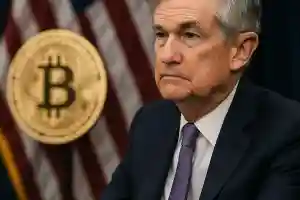
Federal Reserve Independence: Examining the Debate Around Powell and Monetary Policy
Mounting Pressure on the Federal Reserve and Its LeadershipAs the United States...

Meta Slashes 10% of Metaverse Division Amid Strategic Restructuring
Meta Reduces Reality Labs Headcount as Part of Broader Cost StrategyMeta, the pa...

Standard Chartered Prepares to Launch Crypto Prime Brokerage Platform
Standard Chartered Sets Sights on Crypto Prime Brokerage Service Standard Charte...

MicroStrategy Bolsters Bitcoin Holdings with Significant Purchase of 13,627 BTC
MicroStrategy Expands Bitcoin Holdings with Major AcquisitionMicroStrategy, a bu...

Solana’s Price Rebounds While Network Usage Remains Stagnant
Solana's Price Surges Amidst Subdued Network ActivitySolana (SOL), a leading sma...
Previous Posts

TrueBit Token Plummets Following Exploit and Sudden Token Minting
TrueBit Suffers Exploit: Price Drops as Hacker Mints Millions of TokensThe decen...

Truebit Token Plummets After Alleged $5.9 Million Exploit and Rapid Minting Bug
Truebit Faces Crisis After Multi-Million Dollar Token ExploitThe decentralized c...

XRP Emerges as 2024’s Top Cryptocurrency Contender After Impressive Early Surge
XRP Takes Center Stage in the 2024 Cryptocurrency LandscapeAs 2024 unfolds, XRP...

XRP Emerges as 2024’s Breakout Cryptocurrency, Capturing Investor Attention
XRP Takes Center Stage After a Strong Start in 2024XRP, the digital asset native...

Bitcoin Whales and Sharks Accumulate as Bulls Bank on Price Recovery
Bitcoin Heavyweights Boost Holdings Amid Market CorrectionLarge-scale Bitcoin in...

XRP Climbs Sharply, Nears $2.20 Amid Market Momentum and Rising ETF Inflows
XRP Leads Market Gains as Price Nears Critical $2.20 ThresholdXRP has recently c...

Key Bitcoin Valuation Indicator Flashes ‘Buy’ as BTC Price Climbs Beyond $68K
Bitcoin Valuation Signal Turns Bullish Amid $68,000 Price LevelA widely-followed...

Strategy Investment Plans $116 Million Bitcoin Purchase to Launch 2026 Fund
Strategy Investment Prepares Significant Bitcoin Acquisition for New FundStrateg...

Bitcoin’s Latest Parabolic Surge: Unpacking Key Differences From Previous Rallies
The Current Bitcoin Rally in ContextBitcoin’s price has surged dramatically in r...

XRP Surges 10% Amid Robust Bullish Momentum in Crypto Market Rally
XRP Records Double-Digit Gains as Bullish Sentiment Sweeps Crypto MarketsXRP, th...
Next Posts

Ethereum Explores Distributed Block Building to Strengthen Censorship Resistance
Ethereum Charts Path Toward Greater Censorship ResistanceLeaders within the Ethe...

Bitcoin’s Four-Year Cycle and Power Law Suggest Predictable Market Movements Ahead
Bitcoin’s Market Movements Aligned with Historic Four-Year CycleThe cryptocurren...

Stablecoin Payment Cards Set for Rapid Growth by 2026, Report Predicts
Stablecoin Cards Poised for Breakthrough by 2026A recent report by crypto invest...

Bitcoin Technical Indicators Signal Bullish Momentum Amid $90K Price Battle
Bitcoin Approaches $90,000 as Technical Indicators Signal Renewed BullishnessBit...