Bitcoin’s Four-Year Cycle and Power Law Suggest Predictable Market Movements Ahead
 11 Jan 26
Bitcoin’s Market Movements Aligned with Historic Four-Year Cycle
The cryptocurrency market closely watches Bitcoin’s price dynamics, and recent analysis by Capriole Investments indicates the digital asset is currently following its well-known four-year cycle. This phenomenon, tied to Bitcoin’s halving events, is once again being referenced by analysts as price action and investor behavior mirror previous eras.
Current Cycle Displaying Familiar Patterns
Charles Edwards, founder of Capriole Investments, is observing signals that Bitcoin’s current performance is echoing previous four-year cycles. Historically, these cycles are driven by the roughly quadrennial halving, where the number of new bitcoins generated per block is cut in half, tightening supply and often leading to periods of bullish price movement in the following months.
Edwards points out that the market’s price activity in 2024 closely resembles stages seen after previous halvings, especially in 2017 and 2021. These patterns consist of an initial bull phase leading to new highs, followed by a cooling period before resuming the uptrend. The alignment of recent price fluctuations and consolidation beneath all-time highs provides further evidence that the current stage fits within the classic cycle sequence.
Power Law Model Forecasts $65K Retest
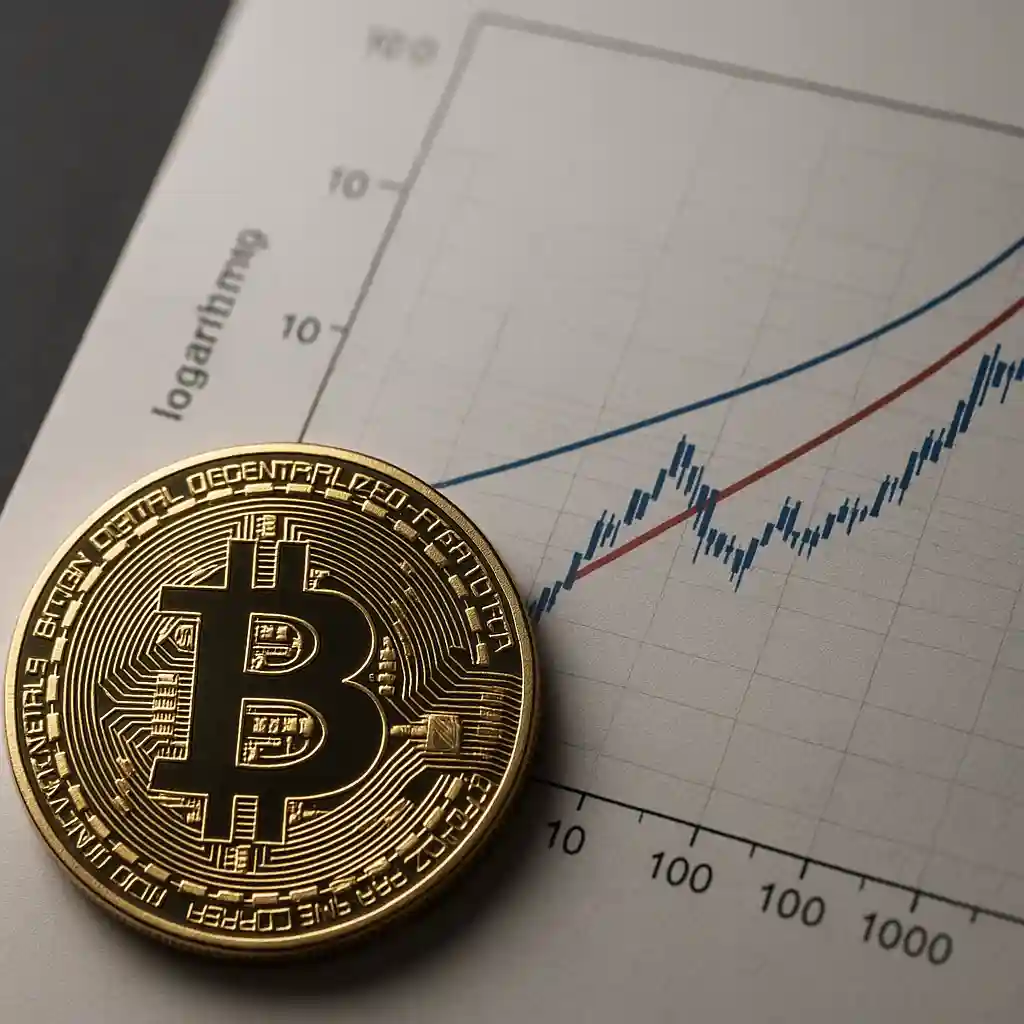
A central element of the analysis involves the ‘power law’ model, a quantitative framework that maps Bitcoin’s price evolution over time. This approach assumes that the value trajectory of Bitcoin follows a mathematical pattern, with support and resistance levels developing in a predictable logarithmic curve.
According to data presented by Capriole Investments, Bitcoin’s recent climb to an all-time high above $73,000 was quickly followed by a pullback and period of consolidation. Edwards claims such retracements are historically consistent with mid-cycle cooldowns before resuming upward momentum. Leveraging the power law model, he projects a potential revisit of the $65,000 level as a significant phase in this ongoing cycle, with the range acting as an important area of price support and investor interest.
Investor Sentiment and On-Chain Dynamics
In recent months, the market has seen heightened volatility, especially around central events such as the launch of spot Bitcoin ETFs and the 2024 halving. Edwards emphasizes that these fluctuations typify the midpoint of previous four-year cycles, a period often marked by both widespread euphoria and rapid corrections as new capital enters the space.
On-chain data—the analysis of blockchain transactions—also supports the notion of a cyclical cooling period. Metrics such as exchange inflows and realized profits show parallels between current investor activity and behaviors exhibited during the 2017 and 2021 bull runs, suggesting that market participants are adhering to familiar patterns of profit-taking, holding, and reaccumulation.
Comparison with Previous Halving Cycles
2021 and 2017 Reflections
To understand the present, analysts routinely compare the current cycle to developments following the 2016 and 2020 halvings. In both instances, Bitcoin witnessed significant upward moves followed by mid-cycle consolidations—periods where prices drift sideways or experience controlled pullbacks before the next leg higher.
Capriole’s findings indicate that after a period of consolidation below all-time highs, previous cycles eventually resolved with price breakouts to new records as demand strengthened and market sentiment gradually shifted back to optimism. If historical patterns hold, Bitcoin’s post-halving trajectory could see a similar outcome, though external economic factors and regulatory changes may also influence the pace and shape of any future rally.
Macro Factors and ETF Influence
The emergence of spot Bitcoin exchange-traded funds (ETFs) has introduced new dynamics to the market’s structure. The inflow of institutional capital, coupled with growing mainstream awareness, is influencing trading volumes and volatility. Edwards notes that Bitcoin’s integration with traditional finance through regulated products has not interrupted the underlying cycle-driven behavior, but it has added new layers of liquidity and speculation.
Beyond speculative drivers, macroeconomic considerations—such as central bank policy, inflation rates, and geopolitical events—continue to affect digital asset adoption and price action. Despite these variables, the core cyclical trend observed by Capriole Investments remains intact, positioning Bitcoin for continued attention from both retail and institutional participants.
Outlook for the Remainder of the Cycle
Based on their ongoing analysis, Capriole asserts that the coming months could see Bitcoin retesting the $65,000 price point as support. Whether this leads to prolonged consolidation or sets the stage for a new bullish phase will depend on both internal market structures and the broader investment environment.
If historical precedents are indicative, investors can expect the remainder of the four-year cycle to involve further volatility, with sharp upward and downward moves tied to shifts in sentiment, external shocks, and milestone events. Nevertheless, the power law model provides a framework to anticipate broad directional trends over time, offering a statistical perspective on Bitcoin’s otherwise unpredictable behavior.
Conclusion: Cycles Continue to Shape Bitcoin’s Path
In conclusion, analyst assessments such as those from Capriole Investments reinforce the view that Bitcoin remains a highly cyclical asset, with predictable patterns emerging after each halving event. While new financial products and macroeconomic shifts may affect the short-term narrative, long-term price evolution appears linked to established cyclical models such as the four-year halving sequence and the power law trajectory. Market participants eyeing the $65,000 level—and beyond—should be mindful of the continued relevance of these frameworks in shaping Bitcoin’s ongoing story.
Share On
Start Solo Mining For Free!
Go HereRecents

How Regulatory Pressure is Transforming Bitcoin's Market Cycles
Introduction: The Four-Year Cycle No Longer Holds SwayBitcoin has long been reco...

Bitcoin Price Hovers Near $95,000 Amid Regulatory Uncertainty in US Crypto Market
Bitcoin Stalls Below $95K as US Crypto Bill Raises Market ConcernsBitcoin's pric...

Sui Mainnet Faces Unexpected Downtime, Halting On-Chain Transactions
Sui Blockchain Experiences Significant Mainnet DisruptionSui, a rising layer one...

NYC Token Faces Controversy After $2.5 Million Liquidity Withdrawal Sparks Rug Pull Accusations
NYC Token Under Fire as Major Liquidity Withdrawal Triggers Community AlarmThe N...

Federal Reserve Building's $2.5 Billion Renovation Raises Questions Amid Economic Uncertainty
Federal Reserve Faced With Backlash Over Expensive Renovation PlansThe Federal R...

Federal Reserve Independence: Examining the Debate Around Powell and Monetary Policy
Mounting Pressure on the Federal Reserve and Its LeadershipAs the United States...

Meta Slashes 10% of Metaverse Division Amid Strategic Restructuring
Meta Reduces Reality Labs Headcount as Part of Broader Cost StrategyMeta, the pa...

Standard Chartered Prepares to Launch Crypto Prime Brokerage Platform
Standard Chartered Sets Sights on Crypto Prime Brokerage Service Standard Charte...

MicroStrategy Bolsters Bitcoin Holdings with Significant Purchase of 13,627 BTC
MicroStrategy Expands Bitcoin Holdings with Major AcquisitionMicroStrategy, a bu...

Solana’s Price Rebounds While Network Usage Remains Stagnant
Solana's Price Surges Amidst Subdued Network ActivitySolana (SOL), a leading sma...
Previous Posts

Stablecoin Payment Cards Set for Rapid Growth by 2026, Report Predicts
Stablecoin Cards Poised for Breakthrough by 2026A recent report by crypto invest...

Bitcoin Technical Indicators Signal Bullish Momentum Amid $90K Price Battle
Bitcoin Approaches $90,000 as Technical Indicators Signal Renewed BullishnessBit...

Bitcoin Stays Resilient Near $91,000 as Investors Watch U.S. Jobs Data and Geopolitical Tensions
Bitcoin Holds Steady Around $91,000 Amid Market UncertaintyBitcoin maintained a...

TrueBit Token Plummets Following Exploit and Sudden Token Minting
TrueBit Suffers Exploit: Price Drops as Hacker Mints Millions of TokensThe decen...

Truebit Token Plummets After Alleged $5.9 Million Exploit and Rapid Minting Bug
Truebit Faces Crisis After Multi-Million Dollar Token ExploitThe decentralized c...

XRP Emerges as 2024’s Top Cryptocurrency Contender After Impressive Early Surge
XRP Takes Center Stage in the 2024 Cryptocurrency LandscapeAs 2024 unfolds, XRP...

XRP Emerges as 2024’s Breakout Cryptocurrency, Capturing Investor Attention
XRP Takes Center Stage After a Strong Start in 2024XRP, the digital asset native...

Bitcoin Whales and Sharks Accumulate as Bulls Bank on Price Recovery
Bitcoin Heavyweights Boost Holdings Amid Market CorrectionLarge-scale Bitcoin in...

XRP Climbs Sharply, Nears $2.20 Amid Market Momentum and Rising ETF Inflows
XRP Leads Market Gains as Price Nears Critical $2.20 ThresholdXRP has recently c...

Key Bitcoin Valuation Indicator Flashes ‘Buy’ as BTC Price Climbs Beyond $68K
Bitcoin Valuation Signal Turns Bullish Amid $68,000 Price LevelA widely-followed...
Next Posts

Ethereum Explores Distributed Block Building to Strengthen Censorship Resistance
Ethereum Charts Path Toward Greater Censorship ResistanceLeaders within the Ethe...